
Introduction to the change
The UK vape industry is preparing for its biggest structural change since the introduction of TPD regulations in 2016. From 1st October 2026, the government will introduce UK Vaping Product Duty, a new tax that will directly increase the cost of e-liquids across the country. Many customers are already asking why vape prices are going up in the UK, whether independent vape shops will survive, and what this means for flavour availability. The reality is that this new vape tax will impact every level of the supply chain, from manufacturers and distributors to independent retailers and customers.

How we grew & adapted
Hulme Vapes began in 2015, shortly after completing a degree in Biomedical Science. The business started in a small corner of a family-run mobile phone repair shop in Hulme, selling early vaping devices such as Debang Stix and classic kits from brands like Smok, Geekvape and Innokin. At that time, the UK vape industry was still developing and regulations were far lighter. By 2018, Hulme Vapes had grown enough to launch its own website and expand its reach nationally, investing heavily in marketing and building long-term supplier relationships. Over the years, the industry has experienced significant shifts, including the introduction of the Tobacco Products Directive (TPD) in 2016, which restricted bottle sizes to 10ml, limited tank capacities to 2ml and capped nicotine strengths. Sales were affected initially, customers resisted the changes, and product reformulations were required. What once felt normal, such as 12mg 50ml shortfills, quickly became a thing of the past. However, the industry adapted and continued to grow.
Panic & problems across the industry are setting in
The introduction of UK Vape Duty in October 2026 represents another major turning point. This new vaping product tax will increase production costs for manufacturers, raise wholesale prices for distributors and ultimately push retail prices higher for customers. It is not simply a small adjustment; it is a fundamental change in how vaping products are taxed and stored within the UK. Manufacturers are already reducing production volumes, cutting flavour ranges and increasing prices ahead of the duty taking effect. Some British manufacturers have chosen to sell their businesses to larger corporations or close entirely due to rising operational pressure. Distributors are becoming more cautious by reducing warehouse inventory and focusing only on high-demand products. Many are deliberately avoiding slow-moving flavours to prevent being caught with unsold stock when the duty becomes active.
Once Vape Product Duty is introduced, manufacturers and distributors will be required to store taxable stock in bonded warehouses where inventory levels must be tracked and reported. This creates additional administrative and operational costs across the supply chain. As a result, customers may already be noticing that certain vape juices are becoming harder to source. This is not accidental; it is a protective measure by suppliers who are preparing for the financial impact of October 2026.
Independent vape shops are in danger
There is also growing concern about the future of independent vape shops in the UK. Larger supermarket chains have already secured supply agreements directly with major vape brands, positioning themselves strongly within the market ahead of the duty changes. As prices increase, some customers may shift towards supermarket retail options. However, independent vape shops provide more than just products. They offer specialist advice, device setup support, guidance for smokers looking to quit, and knowledge about coils, pods and nicotine strengths that supermarkets simply cannot replicate. While the pressure on independent retailers will increase, the businesses that control stock effectively, strengthen customer relationships and adapt early will remain competitive.
When comparing this shift to TPD in 2016, there are clear similarities. The introduction of bottle limits and tank restrictions caused widespread disruption at the time, and many believed the industry would decline permanently. Instead, it adjusted and evolved. The Vape Duty 2026 changes may have an even greater financial impact because they directly affect pricing at every stage of the supply chain. From late 2026 onwards, customers should expect noticeable price increases on e-liquids, potential reductions in flavour variety and a stronger presence of mainstream brands within supermarkets. Budget ranges may become less common as margins tighten across the industry.
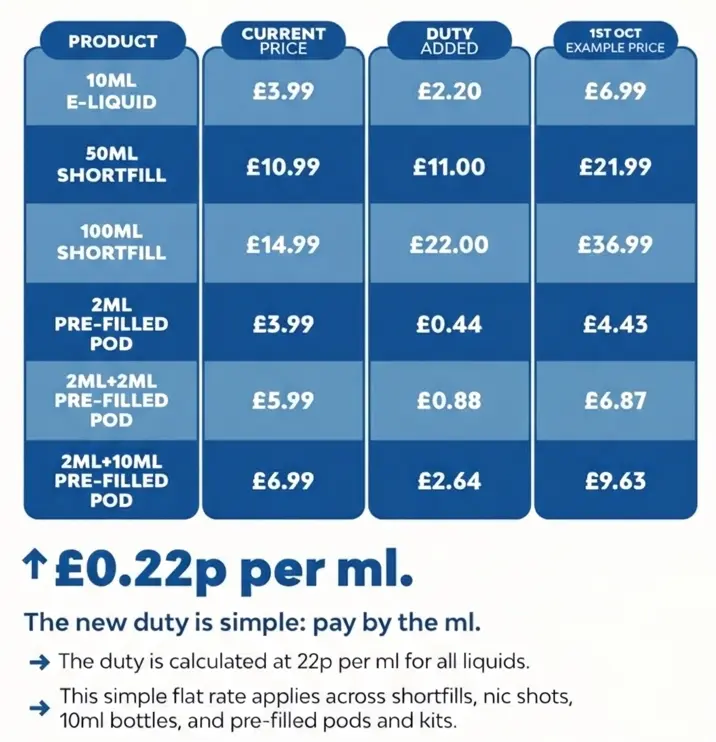
The UK vape industry is undoubtedly tightening. Regulations are increasing, margins are shrinking and large retailers are gaining ground. However, vaping itself is not disappearing. The structure of the industry is changing, just as it did in 2016. Since 2015, Hulme Vapes has navigated regulatory shifts, supplier collapses, disposable transitions and market uncertainty. Preparation for UK Vape Duty 2026 is already underway, and adaptation has always been key to survival in this industry.
The introduction of Vaping Product Duty in October 2026 will reshape the UK market. Some independent vape shops may close, some brands may disappear and prices will increase. But the industry will not vanish. It will evolve. For customers, staying informed is essential. For businesses, adapting early is critical. Hulme Vapes has adapted before, and it intends to continue doing so.
